
A featured contribution from Leadership Perspectives: a curated forum reserved for leaders nominated by our subscribers and vetted by the Manage HR Advisory Board.

SYSTRA Brazil
Developing Professionals, Building Predictability: HRS New Perspective on Productive Capacity
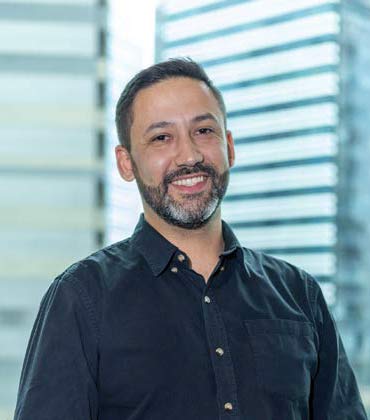
RAFAEL RIQUETTO
From Administrative Function to Strategic Partner
For a long time, the Human Resources function was seen primarily as responsible for administrative processes, recruitment, occasional training and support for leadership. Today, that view no longer meets the real needs of organizations. In a business environment that is increasingly dynamic, competitive and pressured by efficiency, HR has taken on a much more strategic role: developing professionals consistently while also creating predictability around their ability to deliver.
This transformation requires an important shift in perspective. Hiring well is no longer enough. Organizations need to understand, in depth, how they develop their workforce, how long it takes for a professional to reach a certain level of autonomy and productivity and which factors accelerate or slowdown that process. In other words, HR stops focusing only on filled vacancies and starts working on the construction of productive capacity.
Building Predictable Workforce Capability
Developing professionals is not simply about transferring technical knowledge. It means structuring a development journey that connects competencies, behavior, operational context and expected performance. When this development happens intentionally, the organization gains in two ways: employees grow with greater clarity and the company operates with more predictability regarding its future output.
This is one of the most relevant frontiers of contemporary HR. Instead of acting only reactively in response to talent gaps, the function begins to design development paths with objective milestones for progression. This makes it possible to answer decisive business questions: how long does it take for a new professional to reach the expected performance level? What is the average learning curve for each role? What kind of leadership accelerates technical and behavioral maturity? Which competencies have the greatest impact on productivity, quality and safety?
When HR builds this intelligence, it contributes directly to strategic decisions. The company becomes better able to project its operational capacity, identify development bottlenecks, anticipate hiring needs and reduce risks related to dependence on scarce talent. More than developing people, it begins to develop organizational readiness.
Expanding the Talent Development Ecosystem
In this context, it becomes essential to broaden the perspective beyond the company’s own boundaries. Identifying labor training centers, universities, technical schools and organizations capable of developing the technical competencies the business requires is a decisive part of the productivity strategy and, consequently, of revenue generation. Strategic HR does not simply wait for talent to become available in the market; it maps training ecosystems, builds partnerships and brings the company closer to the sources that will supply its future competency needs.
To make this possible, it is essential to move away from the logic of generic training and adopt an evidence-based approach to workforce development. Every role must have clear proficiency criteria, progression indicators and objective parameters that make it possible to measure whether a professional is ready to deliver autonomously. Predictability emerges precisely from this combination of structured development and consistent measurement.
But effective development does not end with traditional training programs. Although they remain relevant, their impact is strengthened when combined with initiatives that are closer to the actual work environment. Mentoring programs, whether individual or groupbased, play a fundamental role in accelerating learning, expanding perspective, shortening adaptation curves and strengthening the confidence of developing professionals. Mentoring builds bridges between knowledge and experience, allowing learning to move beyond theory and be absorbed with greater speed and consistency.
Balancing Data with Human Insight
This does not mean reducing people to numbers. On the contrary, it means recognizing that human development also requires method. Strategic HR understands that data and sensitivity do not compete with one another; they complement each other. Metrics help identify patterns, but it is a qualified reading of the context that turns information into intelligent decisions. A professional may take longer to reach high performance not because of a lack of ability, but because of deficient onboarding, inconsistent leadership, lack of feedback or poor job design.
For this reason, measuring productive capacity should not be treated as a pressure mechanism, but as a development management tool. The goal is not merely to demand results, but to understand how professional readiness evolves over time. When applied well, this practice creates concrete benefits: it improves development quality, increases precision in talent allocation, strengthens internal succession and brings greater transparency to expectations between the company and the employee.
Investing in Long-Term Workforce Readiness
For this strategy to be sustainable, it is essential to build budgets that support a medium- and long-term perspective. Professional development cannot depend solely on isolated decisions or temporary resource availability. When a company does not adequately plan the investments required, it risks interrupting development paths, weakening capability-building initiatives and compromising the consistency of its future delivery capacity. In this sense, budgeting is not merely a financial control mechanism; it is a structural condition for ensuring that workforce development continues in a steady, predictable and business-aligned way.
Leadership and Retention as Strategic Enablers
In this scenario, leadership plays a central role. HR can design processes, development paths and indicators, but development truly happens in the day-to-day work experience. Well-prepared managers can translate expectations into practice, accelerate learning, correct course quickly and create an environment in which performance and development move together. Without this partnership, any predictability model loses strength.
At the same time, developing people well without retaining them intelligently means wasting an important part of the investment made. For this reason, building retention tools is an indispensable part of the equation. However, retention should not be understood only as a mechanism to prevent departures. The real differentiator lies in increasing peoples genuine desire to stay with the company, contribute with engagement and find meaning in their journey. When professionals feel valued, recognized and happy to give back through their contribution, the results go far beyond immediate indicators: culture is strengthened, knowledge transfer expands and a solid foundation is created for the development of the next generations of talent.
Building the Human Capacity for Growth
The future of HR lies precisely in this ability to connect people and business in a concrete way. More mature organizations will be those capable of turning development into strategy, learning into installed capacity and growth into operational predictability. This requires discipline, method, listening, systems thinking and a commitment to continuity.
In the end, HRs greatest contribution is not only to hire or retain talent, but to intentionally build the human capacity that sustains business growth. When professional development is treated as a structured, measurable process aligned with strategy, the company gains more than productivity. It gains consistency, sustainability and confidence to grow. And when this is combined with partnerships with training institutions, mentoring programs, long-term budget planning and authentic retention strategies, HR stops being merely a support function and becomes one of the main architects of the organization’s future capacity.
The articles from these contributors are based on their personal expertise and viewpoints, and do not necessarily reflect the opinions of their employers or affiliated organizations.
Be first to read the latest tech news, Industry Leader's Insights, and CIO interviews of medium and large enterprises exclusively from Manage HR Magazine
